Bahamas Diving: Your Complete Guide to Paradise Underwater
Why Bahamas Diving Belongs on Your Bucket List
Let’s get straight to it: if you’re looking for world-class Bahamas diving, you’re in for something special. Picture this—over 700 islands scattered across some of the clearest water you’ll ever see, each one offering its own underwater adventure. We’re talking thrilling shark encounters, coral reefs that look like they’re straight out of a nature documentary, and mysterious blue holes that’ll make your jaw drop.
Here’s what makes Bahamas diving so incredible: the archipelago sits on the world’s third-largest barrier reef, the water visibility often exceeds 200 feet (seriously, you can see forever down there), and the water stays warm year-round. Whether you’re getting certified for the first time or you’re a tech diver looking for your next challenge, the Bahamas has you covered.
What Actually Makes Bahamas Diving Different?
You Can See Everything (And We Mean Everything)
The first thing you’ll notice about Bahamas diving is the water clarity. It’s not unusual to have 100-200 feet of visibility, which is pretty mind-blowing when you’re floating above a massive wall or watching sharks cruise by in the distance. For photographers, this is absolute heaven.
The Reef System Is Massive
The Andros Barrier Reef stretches over 140 miles, making it the third-largest barrier reef system in the world. Add in hundreds of patch reefs scattered throughout the islands, and you’ve got more diving terrain than you could explore in a lifetime. Each reef has its own personality and marine life community.
The Shark Diving? It’s Legendary
Look, if you want to dive with sharks, the Bahamas is where you need to be. Caribbean reef sharks, nurse sharks, hammerheads, tiger sharks—the list goes on. Places like Bimini, Tiger Beach, and Cat Island have become famous specifically because the shark encounters are just that good.
Blue Holes Everywhere
The Bahamas has more blue holes than anywhere else on Earth. Dean’s Blue Hole alone drops 663 feet—it’s the second-deepest in the world. These limestone formations range from easy recreational dives to serious technical challenges that’ll test even experienced cave divers.
They’re Actually Protecting the Reefs
Unlike some destinations where you’re diving on beat-up reefs, the Bahamas has established real marine reserves. San Salvador Island has been protected since 2015, and it shows. The reef health there is what the entire Caribbean used to look like decades ago.
Where Should You Actually Go for Bahamas Diving?
San Salvador Island (Our Top Pick)

If you want pristine Bahamas diving without the crowds, San Salvador is it. As a protected marine reserve, this place has stayed remarkably untouched. Located on the eastern edge of the Bahamas, it’s a bit more remote—which is exactly why it’s so special.
What you’ll find here:
- Coral gardens with visibility that can hit 200 feet on a good day
- Wall dives that drop into the abyss (we’re talking thousands of feet)
- Healthy populations of sea turtles, rays, and just about every tropical fish you can imagine
- Multiple shark species, including Caribbean reef sharks
- Historical bragging rights—this is where Columbus first landed
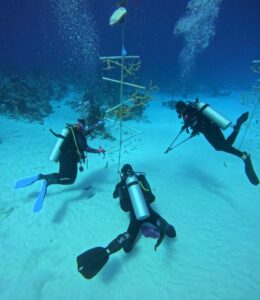
The remote location means fewer divers, which means healthier reefs and better diving. Only Blue Diving Center operates out of Club Med Columbus Isle here, and they’ve got something most dive centers don’t: an actual hyperbaric chamber on-site. They’re also serious about conservation with their coral farming program. And it is nearby many local Bahamas villas and other residential areas.
Nassau & New Providence
Nassau is the gateway for most people doing Bahamas diving. It’s the capital, flights are easy, and there’s diving infrastructure everywhere. You’ll find:
- Direct flights from pretty much anywhere
- Tons of dive operators running daily trips
- Famous sites like the James Bond wrecks
- Shark feeding experiences (love them or hate them, they’re popular)
- Easy access to the Exuma Cays
The Exuma Cays
This chain of 365 cays is where things get really pristine. Most people access the Exumas via liveaboard, which is honestly the best way to do it. You’ll get:
- Thunderball Grotto (yes, from the James Bond movie)
- Shallow reefs perfect for newer divers
- Dramatic walls for the experienced crowd
- The swimming pigs everyone posts on Instagram
- The Exuma Cays Land & Sea Park—which was actually the Caribbean’s first marine reserve back in 1958
Grand Bahama Island
Freeport sits here, and the diving is diverse:
- Tiger Beach—need we say more?
- Dolphin encounters at Sanctuary Bay
- Extensive reef systems
- Multiple wrecks to explore
- Cave and cavern diving if that’s your thing
Bimini
Just 50 miles from Florida, so it’s super accessible. Famous for:
- Hammerhead encounters from December through March
- The Bimini Road—that mysterious underwater formation
- Bull shark diving
- Quick weekend trips from the mainland
Andros Island
The biggest island in the Bahamas, but somehow still uncrowded:
- The massive Andros Barrier Reef
- The Tongue of the Ocean—a 6,000-foot deep trench (it’s as dramatic as it sounds)
- Hundreds of blue holes to explore
- Peaceful diving without the crowds
The Different Types of Diving You Can Do in the Bahamas
Wall Diving
The walls in the Bahamas are no joke. We’re talking vertical drop-offs that plunge thousands of feet into deep blue water, covered in colorful sponges, black coral, and sea fans. Sites around San Salvador and the Exumas will give you that adrenaline rush when you peer over the edge into the abyss. You’ll often spot pelagics cruising the blue.
Wreck Diving
The Bahamas has wrecks for every interest level:
- The Mahoney Wreck near Nassau (an 1800s steamship)
- James Bond movie wrecks (Hollywood left them behind)
- The Austin Smith wreck
- Various cargo ships scattered throughout the islands
Shark Diving
This is what the Bahamas is really known for. Bahamas diving and sharks go together like… well, like sharks and water. Here’s when to see what:
- Tiger sharks at Tiger Beach (October-January)
- Hammerheads in Bimini (December-March)
- Caribbean reef sharks pretty much everywhere, all year
- Oceanic whitetips at Cat Island (April-June)
- Bull sharks at various spots year-round
Blue Hole Adventures
These geological wonders range from easy introductory dives to extreme technical challenges:
- Dean’s Blue Hole on Long Island (663 feet deep—bring your A-game)
- Stargate Blue Hole on Andros
- Multiple accessible blue holes perfect for recreational divers
- Deep exploration requires proper cave diving certification (seriously, don’t skip this)
Classic Reef Diving
The bread and butter of Bahamas diving is still the healthy coral reefs:
- Thriving hard and soft corals
- Schools of tropical fish everywhere
- Sea turtles, rays, and nurse sharks hanging around
- Coral gardens at every depth range
- Active conservation keeping these reefs healthy for the long term
What Marine Life Will You Actually See When Diving in the Bahamas
Sharks: Caribbean reef sharks, nurse sharks, lemon sharks, tiger sharks, hammerheads, bull sharks, blacktip sharks
Rays: Southern stingrays, eagle rays, spotted eagle rays, occasional manta rays
Sea Turtles: Green turtles (common), hawksbill turtles, loggerheads
Big Stuff: Nassau groupers, black groupers, tiger groupers, barracudas, jacks, snappers, tarpon
Reef Fish: Angelfish, butterflyfish, parrotfish (they poop sand, by the way), wrasses, tangs, damselfish, trumpetfish
Weird Cool Stuff: Spiny lobsters, spotted cleaner shrimp, flamingo tongue snails, various crabs that photobomb your pictures
Corals & Structures: Brain coral, elkhorn coral, staghorn coral, star coral, sea fans, sea whips, barrel sponges big enough to sit in
When’s the Best Time for Bahamas Diving?
Peak Season (November-May)
- Water temps: 75-80°F
- Best visibility of the year
- Prime shark diving season
- Drier weather topside
- More expensive, more crowded
- Book early
Summer Season (June-October)
- Water temps: 82-88°F
- Hurricane season (August-October is peak)
- Way fewer divers
- Better deals on everything
- Still excellent diving conditions
- Just keep an eye on weather
Shark Season Specifics:
- Tiger sharks: October-January
- Hammerheads: December-March
- Oceanic whitetips: April-June
- Caribbean reef sharks: Literally always
Here’s the truth though: Bahamas diving is good year-round. The subtropical climate means you’re getting warm water and solid conditions no matter when you show up. We’ve done amazing dives in every single month.
What to Wear in the Water
| Season | Water Temp | What We Actually Wear |
|---|---|---|
| Winter (Dec-Mar) | 75-78°F | 5mm wetsuit (you’ll appreciate it) |
| Spring (Apr-May) | 78-82°F | 3mm wetsuit or shorty |
| Summer (Jun-Aug) | 84-88°F | Shorty or just a rash guard |
| Fall (Sep-Nov) | 80-84°F | 3mm wetsuit or shorty |
Most people find a 3mm wetsuit works for year-round Bahamas diving, though you’ll want that 5mm in winter if you get cold easily.
Is This Right for Your Experience Level?
Total Beginners
The Bahamas is actually perfect for learning:
- Calm, clear water with barely any current
- Shallow reef dives (30-60 feet is standard)
- Amazing visibility so you’re not stressed about seeing
- Professional instruction literally everywhere
- Honestly one of the best places in the world to get your Open Water cert
Intermediate Divers
Ready to level up? Try:
- Wall dives starting around 40-60 feet
- Mild drift dives
- Wreck penetration on easier wrecks
- Deep dives to 100 feet
- Various Advanced and specialty certifications
View this post on Instagram
Advanced & Tech Divers
Push your limits with:
- Deep wall dives past 130 feet
- Blue hole exploration and proper cave diving
- Strong drift dives
- Technical wreck penetration
- Rebreather diving opportunities
Getting Certified in the Bahamas
Learning to dive here is honestly an experience you’ll never forget. The conditions are so good—clear, warm water with tons of marine life—that it makes the learning process way more enjoyable.
PADI Open Water Diver Course
- Usually takes 3-4 days
- Pool sessions plus open water dives
- Costs around $450-650
- Pro tip: Do the eLearning beforehand so you maximize dive time
PADI Advanced Open Water
- Takes 2 days minimum
- Five specialty dives (deep and navigation are required)
- Runs about $350-500
Cool Specialty Certifications
- Nitrox (get this—it’s worth it)
- Wreck Diver
- Deep Diver
- Shark Conservation
- Coral Reef Conservation
- Sea Turtle Awareness
Places like Only Blue at San Salvador partner with the Perry Institute for Marine Science to offer conservation-focused courses. You’re learning and actually contributing to real science, which is pretty cool.
Let’s Talk About Safety
Hyperbaric Chambers
The Bahamas takes diver safety seriously. Only Blue Diving Center at Club Med Columbus Isle on San Salvador has an on-site hyperbaric chamber, which is honestly rare and super valuable. Several of their instructors trained directly with Dr. Joseph Dituri (Dr. Deep Sea). Nassau also has hyperbaric facilities, and established operators maintain proper emergency oxygen, first aid kits, and evacuation plans.
Diving with Sharks (Safely)
Despite what movies tell you, sharks in the Bahamas are generally pretty chill around divers. Just follow the rules:
- Don’t feed them (unless you’re on an organized feeding dive with pros)
- Keep your buoyancy neutral and don’t make weird movements
- Give them space—no touching
- Listen to your dive briefing carefully
- Stay with your group and guide
- Skip the shiny jewelry that might look like fish scales
Weather Stuff
Hurricane season (June-November) means you need to watch forecasts. Most operations shut down during bad weather anyway. Always:
- Check weather before you book
- Get travel insurance (seriously)
- Listen to your dive operator
- Be flexible if conditions get sketchy
Where to Stay While You’re Diving in the Bahamas
All-Inclusive Dive Resorts
Club Med Columbus Isle (San Salvador)
- The only all-inclusive on San Salvador
- Only Blue Diving Center right there
- Unlimited diving packages available
- Hyperbaric chamber on-site
- Great if you’ve got non-divers or kids with you
Other Options:
- Stella Maris Resort (Long Island)
- Small Hope Bay Lodge (Andros)
- Tiamo Resort (Andros)
Regular Hotels + Local Dive Shops
Most islands work this way:
Nassau/Paradise Island: Stay at Atlantis or British Colonial Hilton, dive with local shops
Grand Bahama: Try Viva Wyndham Fortuna Beach or Pelican Bay Hotel
Bimini: Bimini Big Game Club with dedicated dive centers
Liveaboards (For the Serious Divers)
If you want maximum dive time, liveaboards are where it’s at:
Aqua Cat – Luxury catamaran in the Exumas Bahamas Aggressor – Comfortable yacht with tech diving Blackbeard’s Cruises – Budget-friendly sailing Cat Ppalu – Small group, more personal
Liveaboards typically give you:
- 4-5 dives daily including night dives
- Access to remote sites day boats can’t reach
- All meals and equipment included
- Week-long trips
- Experienced crew who know the sites cold
What’s This Going to Cost You?
Two-Tank Boat Dives: $120-180 Single-Tank Dive: $70-100 Full Equipment Rental: $40-60 per day Nitrox Fill: $10-15 per tank Open Water Cert: $450-650 Week-Long Package (10-12 dives): $600-900
How to Save Money:
- Book all-inclusive dive packages at resorts
- Bring your own gear if you have it
- Visit during shoulder season (May-June, November)
- Liveaboards often give you the best per-dive value
- Get certified before you arrive (saves vacation time)
Getting There
Main Airports
Lynden Pindling International Airport (Nassau) – This is your main hub
- Direct flights from most major US cities
- International connections from Canada, Europe, and throughout the Caribbean
- Where most people fly in and out
Grand Bahama International Airport (Freeport)
- US connections
- Smaller operation with limited international service
Other Islands Most islands have small airports. You’ll connect through Nassau via Bahamasair, Southern Air, or charter flights.
San Salvador Specifically
Flights usually connect through Nassau. Club Med Columbus Isle can arrange complete packages including flights, which honestly makes it easier.
What You Need to Bring
- US Citizens: Valid passport, return ticket, fill out the immigration form
- Other Countries: Check if you need a visa
- Divers: Bring your cert cards and logbook
Conservation Matters Here
The Bahamas has actually done a solid job protecting its reefs:
Protected Areas
- San Salvador Marine Reserve (2015)
- Exuma Cays Land & Sea Park (1958—way ahead of its time)
- Conception Island National Park
- Bunch of other marine protected areas
Coral Restoration
Organizations like the Perry Institute for Marine Science work with dive centers on real coral restoration. Only Blue Diving Center runs multiple coral farms around San Salvador, actively growing and transplanting coral to damaged reef areas.
What Good Operators Do
- Enforce strict no-touch policies
- Use mooring buoys instead of dropping anchors
- Keep group sizes manageable
- Ban single-use plastics
- Teach conservation
- Partner with research organizations
You Can Help Too:
- Choose operators who actually care about conservation
- Master your buoyancy (don’t be that diver who kicks the reef)
- Never touch coral or marine life
- Join citizen science programs if they’re available
- Take conservation specialty courses
- Support marine park fees when required
- Use reef-safe sunscreen only
Planning Your Bahamas Diving Trip: The Practical Stuff
6-12 Months Out:
- Pick your island(s)
- Book flights and where you’re staying
- Get certified or renew certs if needed
- Consider travel insurance
- Book liveaboards early (they fill up fast)
2-3 Months Out:
- Reserve your dive packages
- Complete any eLearning courses
- Service your gear or arrange rentals
- Research specific sites you want to hit
- Plan what you’ll do when you’re not diving
1 Month Out:
- Confirm everything
- Check weather patterns for your dates
- Pack and check your gear
- Make sure your passport isn’t expiring
- Download offline maps and resources
Week Before:
- Check in for flights
- Final gear check
- Review dive plans
- Pack reef-safe sunscreen and any meds
- Tell your bank you’re traveling
What If You’re Not Diving Every Second?
Water Activities: Snorkeling, kayaking, paddleboarding, sailing, fishing, island hopping between cays
Land Stuff: Beach time, historical sites, nature trails, bird watching, trying local food
Nassau Specifically: Atlantis Resort, day trips to see the swimming pigs, rum distillery tours, old forts
San Salvador: Pristine empty beaches, Columbus monuments, inland lakes, biking, kayaking through mangroves
Questions People Always Ask About Scuba Diving in the Bahamas
Q: Can beginners really dive in the Bahamas? A: Absolutely. The conditions here are actually ideal for learning—calm, clear water with great visibility and professional instructors everywhere.
Q: When should I come for shark diving? A: Depends which sharks you want. Tigers show October-January, hammerheads December-March, oceanic whitetips April-June. Caribbean reef sharks are around all year though.
Q: Is Bahamas diving expensive? A: It’s not cheap, but it’s not crazy either. Figure $120-180 for two-tank dives, $450-650 for certifications, and $600-900 for week-long packages. Liveaboards run $1,500-3,500 weekly.
Q: Do I need Advanced certification? A: Not necessarily. Tons of great sites are fine for Open Water divers. But Advanced opens up deeper walls, better wrecks, and more challenging sites.
Q: Can I dive the blue holes? A: You can explore the entrances and shallow areas with just Open Water. Going deep or doing any cave penetration requires technical and cave certifications—don’t skip these.
Q: How’s the visibility? A: Incredible. We’re talking 100-200 feet regularly, which makes the Bahamas one of the clearest diving destinations anywhere.
Q: Are there hyperbaric chambers? A: Yes—Nassau has one, and Only Blue on San Salvador has one on-site. Good operators also carry emergency oxygen and have evacuation plans.
Q: Can I get nitrox? A: Most professional operations offer it for certified divers, usually $10-15 per tank.
Bottom Line: Your Bahamas Diving Adventure
Bahamas diving really does have something for everyone. First-time divers learning in perfect conditions. Experienced divers checking off bucket-list sites. Tech divers pushing their limits in blue holes. The combination of healthy reefs, dramatic walls, amazing shark encounters, mysterious blue holes, and that ridiculously clear warm water makes the Bahamas a place you need to dive at least once in your life.
Whether you pick the pristine remote beauty of San Salvador, the easy accessibility of Nassau, the liveaboard adventure in the Exumas, or the shark action at Bimini, you’ll understand why the Bahamas consistently ranks among the world’s top diving destinations.
The underwater world is waiting. Crystal-clear water, vibrant reefs, and unforgettable encounters are just a flight away. Time to start planning your Bahamas diving trip—the ocean’s calling.
Ready to Experience the Best Bahamas Diving? Book With Only Blue Today
Don’t just read about pristine Bahamas diving—come experience it yourself at San Salvador Island’s protected marine reserve with Only Blue Diving Center.
Why Choose Only Blue Diving Center?
Safety Standards That Actually Matter ✓ On-site hyperbaric chamber at Club Med Columbus Isle (seriously rare in the Bahamas) ✓ Dive doctor available at all times ✓ Instructors trained by Dr. Joseph Dituri (Dr. Deep Sea) ✓ All boats carry oxygen, first aid, and proper emergency equipment ✓ PADI and CMAS certified operations
Diving Conditions You Won’t Find Anywhere Else ✓ San Salvador Marine Reserve—protected since 2015 ✓ Visibility regularly hitting 200 feet ✓ Uncrowded sites with abundant marine life ✓ Morning two-tank dives + afternoon single-tank dives ✓ Weekly night dives for certified divers ✓ Private boat charters available
We Actually Care About the Environment ✓ Active coral restoration with multiple working coral farms ✓ Partnership with Perry Institute for Marine Science ✓ Zero plastic policy on all our boats ✓ PADI conservation specialty courses (Coral Reef Conservation, Sea Turtle Awareness, Shark Conservation) ✓ Hybrid solar/electric boats launching soon
Full Service for Every Experience Level ✓ Complete PADI certification courses from beginner through advanced ✓ Both air and nitrox diving available ✓ Equipment rentals and sales ✓ Multilingual staff (French, English, Spanish) ✓ Welcome Club Med guests and outside visitors
Bahamas Scuba Diving Packages We Offer
All-Inclusive Dive Packages – Combine your Club Med Columbus Isle stay with unlimited diving
Certification Packages – Learn to dive in one of the world’s most pristine locations
Conservation Courses – Earn specialty certifications while contributing to real reef protection
Book Your Adventure Now
📧 Email: [email protected]
🌐 Website: www.onlyblue-diving.com
📍 Location: Club Med Columbus Isle, San Salvador Island, Bahamas
Spots are limited—especially during peak season (November-May). Reserve your diving adventure today.
Experience the Bahamas the way it’s meant to be explored—pristine, protected, and absolutely unforgettable. Only Blue Diving Center: Your gateway to San Salvador’s underwater paradise.